Children of Men at 20: The Film That Saw Everything Coming
Twenty years ago, Alfonso Cuarón made a movie about a world falling apart — refugee camps, government crackdowns, a population too exhausted to hope. In 2026, it doesn't feel like science fiction anymore. It feels like a documentary from next year.
Twenty years ago, Alfonso Cuarón released a film that nobody went to see.
Children of Men opened in December 2006 to $35 million worldwide against a $76 million budget. By Hollywood math, it was a flop. The Academy gave it three nominations — Cinematography, Editing, Adapted Screenplay — and zero wins. It lost all three. Audiences who did show up weren't sure what to do with it. Too bleak for popcorn entertainment, too visceral for prestige drama, too British for mainstream American audiences.
And then something happened. Slowly, persistently, relentlessly — like the film's own themes — Children of Men refused to die.
The World According to 2027
The setup is brutally simple. It's 2027. No child has been born on Earth in 18 years. Society hasn't collapsed in a dramatic, Hollywood-explosion kind of way. It's collapsed the way societies actually collapse: in paperwork and paranoia. Britain has sealed its borders. Refugees are caged in camps. The government runs on fear. People go to work, take the train, drink coffee — but there's a hollowness behind the eyes.
Cuarón wasn't interested in the why of infertility. He was interested in the what happens next. And what happens next, in his vision, is that people give up. Not with a bang. With a shrug.
Here's what makes it eerie in 2026: Cuarón wasn't making predictions. He was making observations. The refugee crisis, the surveillance state, the media-saturated apathy, the way governments trade freedom for the appearance of security — none of that was invented for the film. It was already there in 2006. He just turned up the volume.
Emmanuel Lubezki and the Language of Chaos
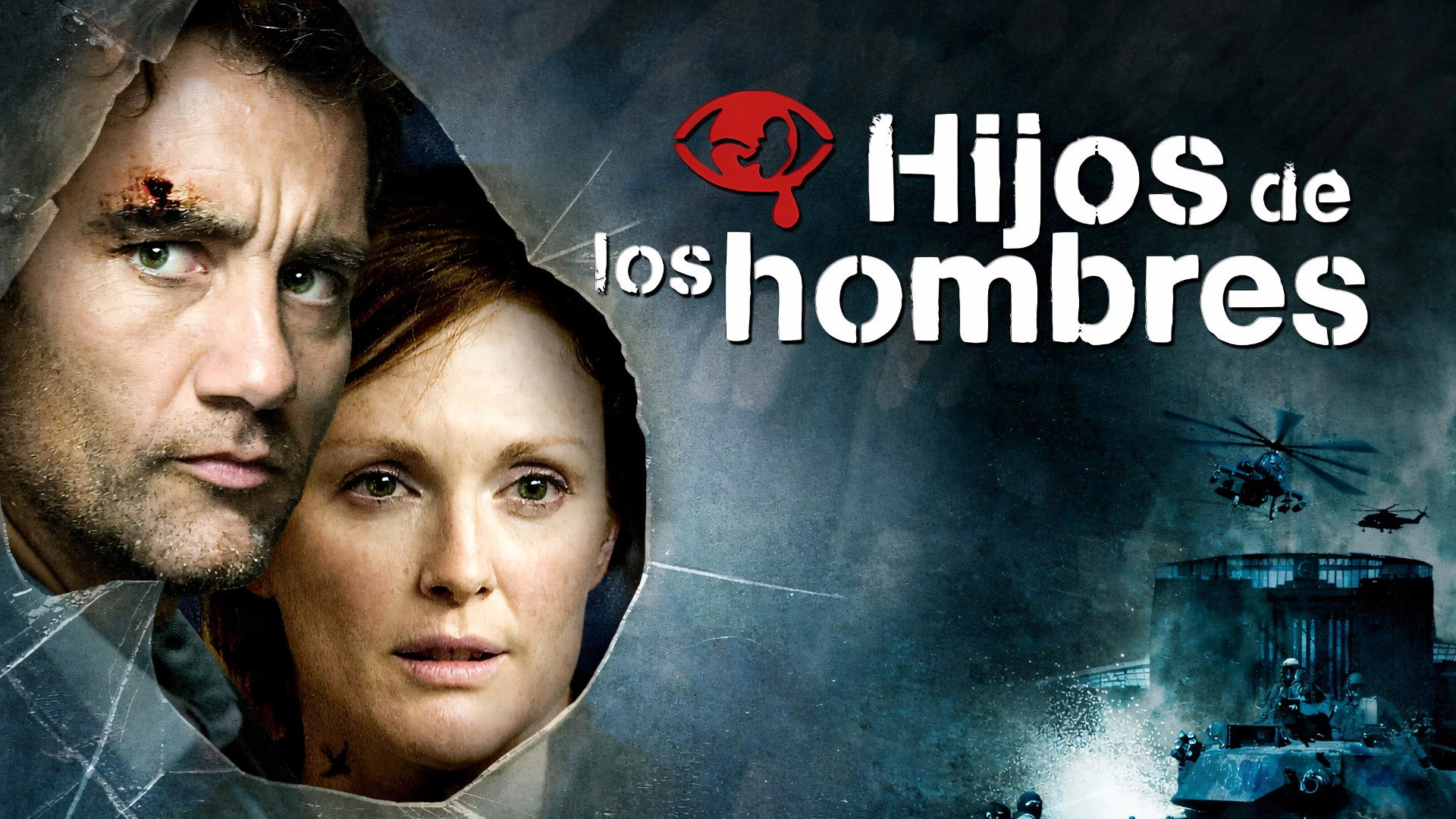
Let's talk about that cinematography. Emmanuel "Chivo" Lubezki, already one of the best DPs alive, essentially rewrote the rules of how action sequences could look.
The car ambush scene. You know the one. A single unbroken shot — the camera swiveling inside the vehicle as attackers swarm from the trees, blood hits the lens, the car reverses at speed. No cuts. No music. Just raw, suffocating immersion.
Then there's the Bexhill battle sequence. Nearly eight minutes of continuous footage following Theo (Clive Owen) through an active warzone — explosions, gunfire, soldiers, refugees, a building collapsing around him. The technical logistics of pulling this off in 2006 were insane. Hidden cuts were stitched so seamlessly that even knowing they're there, you can't find them.
This wasn't just showing off. The long takes serve a purpose. When the camera doesn't cut, you can't escape. You're locked into Theo's perspective, his exhaustion, his terror. There's no relief valve. The audience doesn't get the luxury of a new angle. You're in it.
Every major film that's attempted the "one-shot" approach since owes a debt to this movie. Gravity (2013) — Cuarón and Lubezki together again — opened with a 17-minute unbroken shot in space. Birdman (2014) disguised its entire runtime as one continuous take. The Revenant (2015) used Lubezki's natural-light, fluid camera work to earn him a third consecutive Oscar. 1917 (2019) structured its entire war narrative around the illusion of a single shot.
All roads lead back to that car scene.
The Anti-Hero We Needed
Clive Owen's Theo Faron might be the most human protagonist in modern sci-fi. He's not chosen. He's not special. He's a burned-out bureaucrat who drinks too much and has given up on caring about anything. When he stumbles into the most important mission in human history — protecting the first pregnant woman in 18 years — he doesn't transform into an action hero.
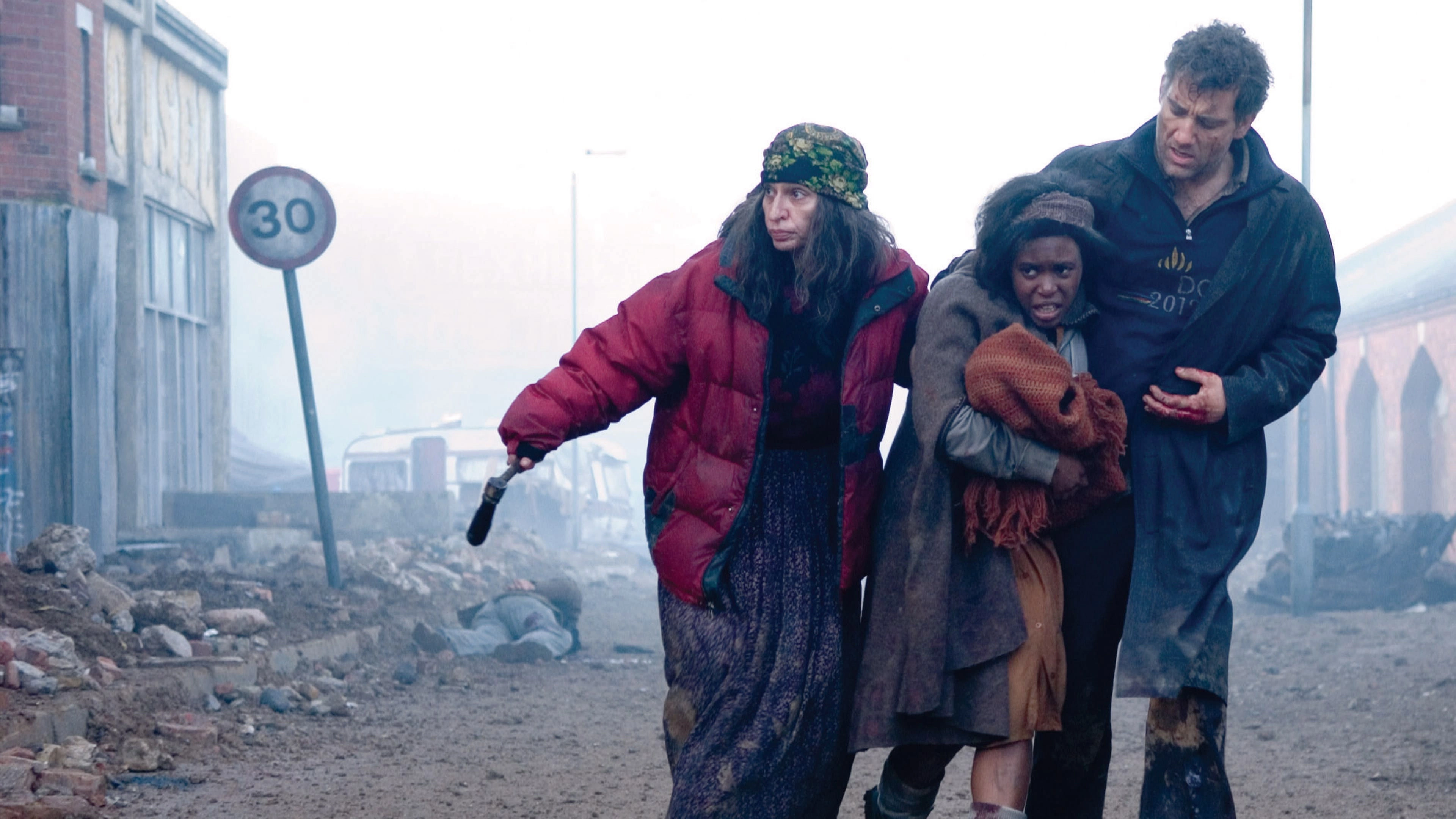
He stays scared. He stays clumsy. He runs in a way that looks like actual running — panicked, uncoordinated, desperate. He doesn't deliver speeches about saving humanity. He just keeps moving because stopping means dying.
In an era of superhero franchises and indestructible protagonists, Theo remains a reminder of what real stakes look like. He's us. Not who we want to be — who we actually are.
The Influence You Can See (and the Influence You Can't)
The obvious legacy is technical. But the deeper influence is tonal. Children of Men proved you could make a dystopian film that felt lived-in rather than designed. The world wasn't clean and futuristic. It was dirty, cluttered, and recognizable. Newspapers on the floor. Graffiti on walls. Stained coffee cups.
Mad Max: Fury Road borrowed its relentless forward momentum. Blade Runner 2049 shared its meditation on fertility and what makes a species worth saving. Roma — Cuarón's own 2018 masterpiece — carried forward the idea that intimacy and chaos can coexist in a single frame. HBO's The Last of Us openly pays homage to its refugee imagery and the fragile hope embedded in protecting one life.
But the influence you can't always see is in how filmmakers now think about dystopia. Before Children of Men, the default was spectacle — bombed-out cities, leather-clad rebels, monologue-delivering villains. After it, the best dystopian stories understood that the scariest futures look almost exactly like the present, just slightly worse.
20 Years Later
Here's the uncomfortable truth: Children of Men is more relevant in 2026 than it was in 2006.
The climate anxiety. The refugee crises. The way governments respond to fear with walls instead of solutions. The media cycle that turns tragedy into background noise. The collective fatigue of caring about things that never seem to get better.
Cuarón showed us a world where humanity's extinction wasn't dramatic — it was boring. People just stopped. And the radical act wasn't revolution or heroism. It was one person deciding to care about one other person, even when caring was the hardest thing to do.
Twenty years on, that message hasn't aged a day.
If you haven't revisited it recently — or if you've somehow never seen it — now is the time. Not because it's a "classic you should watch." Because it'll make you feel something. And in 2026, that might be the most radical act of all.
Casey Throwback Mills writes about classic films and their enduring relevance for spameri.cz/blog.
Comments (0)
Log in to leave a comment.