Captain's Log: Kate Mulgrew on the Weight of Being First — Janeway at 60
In a new 60th-anniversary interview, Kate Mulgrew reflects on what it actually cost and meant to become Star Trek's first female captain — and on the young women in STEM who tell her, decades later, that Janeway is the reason they're in the room. It's worth sitting with what that first season really required of her.
Captain's log, stardate 2026.901. There is a difference between being cast as a captain and being allowed to be one, and Kate Mulgrew's new 60th-anniversary interview is the clearest she's ever been about which one actually happened to her on the bridge of Voyager.
"I won this game because I'm a strong actress, and I loved Janeway," Mulgrew said, describing how the men around her — cast, crew, the production apparatus itself — "slowly divested themselves of their concern and allowed themselves to come to me as their captain." Read that sentence again. It isn't a story about winning an audition. It's a story about winning a set, episode by episode, until the fiction of the crew respecting their captain and the reality of the cast respecting their lead actress became the same fact. Janeway premiered in "Caretaker" in January 1995 as the first woman to command a Star Trek series, and Mulgrew is telling us, thirty-one years later, that the show had to earn that premise in production the same way the character had to earn it in the story.
That's the part casual viewers tend to skip past. Janeway wasn't written as effortlessly authoritative the way Picard or Kirk got to be — the franchise's two most iconic captains before her had the benefit of a genre that already assumed a man could command a starship without anyone blinking. Janeway had to be right more often, colder when she needed to be (ask the Equinox crew, or ask what she did to her own moral code getting Voyager home), and somehow still warm enough to keep a crew of Starfleet officers and ex-Maquis terrorists from killing each other for seven seasons stranded 70,000 light-years from home. Sisko had a space station and a war to define him. Kirk had the frontier. Picard had diplomacy and restraint. Janeway had to invent the job while doing it, alone, with no backup from the Alpha Quadrant and no precedent from the franchise. That's a harder captaincy than any of the others got assigned, and Mulgrew playing it while also managing a set that hadn't yet decided to trust her is the real footnote history undersells.
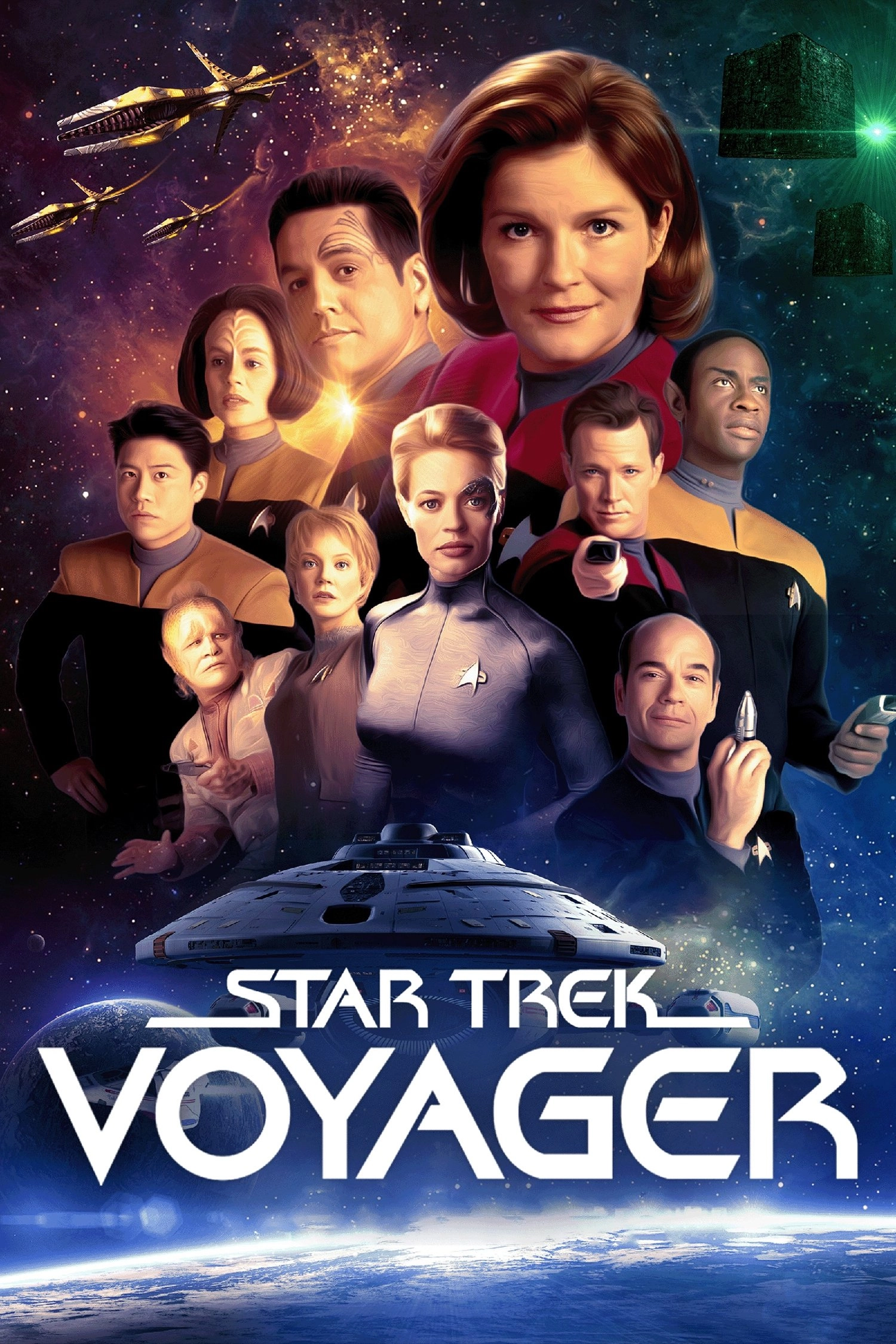
What she says lands hardest is the STEM point. "It's an extraordinary privilege to play the first female captain, and to learn the significance it has had, particularly on women in STEM, is amazing and deeply gratifying," Mulgrew said — and it's not actor's-press-tour flattery of her own legacy. It's a documented phenomenon. Voyager premiered into a mid-90s pop culture landscape that was not exactly flooded with women scientists commanding anything, and Janeway spent seven years doing warp field theory and first-contact protocol in the same breath as command decisions. Kids who grew up watching that went into physics and engineering, and they've made a point of telling her so for three decades. That's the part of "representation matters" that's usually argued about in the abstract. Here it's not abstract. It's Mulgrew, at 71, still visibly moved by it: "It did define me in a way I wasn't prepared for," she admits. "People always lead with Captain Janeway, whatever the conversation is. That continues to surprise me, but it has had a global impact."
It's also worth noting Mulgrew never really left the chair. She came back as Admiral Janeway in Prodigy — mentoring an entirely new generation of Starfleet hopefuls who, notably, aren't Starfleet-born at all, which is its own quiet continuation of the original point. Janeway's whole arc, from a captain nobody on set initially trusted to an admiral training the franchise's next unlikely crew, is a 30-year through-line that most Trek captains don't get: she went from proving herself to being the proof.
Sixty years in, Trek has had captains defined by frontier optimism, by wartime pragmatism, by diplomatic restraint. Janeway is the one defined by having to build the authority everyone else was simply granted — and then handing that authority forward to the next crew that needed it granted to them too. That's not a footnote in franchise history. That's the thesis of the whole show, delivered by an actress who lived it off-camera as much as her character lived it on.
For anyone treating Voyager as the "lesser" 90s Trek: reconsider the math. Seven seasons, one captain who had to out-perform the doubt in her own writers' room before she could out-navigate the Delta Quadrant, and a documented pipeline of real scientists who point to her as the reason they picked their field. Kirk got a five-year mission. Janeway got a job nobody was sure she should have, did it for seven years anyway, and is still being thanked for it at 71.
Live long and prosper, Captain. You won the game.
Related title: Star Trek: Voyager
Comments (0)
Log in to leave a comment.