Captain's Log: Holly Hunter Says the Quiet Part Out Loud — "The Definition of Star Trek Is Woke"
In a new interview, Holly Hunter reflects on Starfleet Academy's cancellation, the backlash over its diverse cast, and William Shatner's blunt response to the critics. It's a fight Star Trek has been having with itself since 1968 — and it's worth remembering who won it then.
Captain's log, supplemental. Every Trek generation thinks it invented the argument about whether the franchise has gotten "too political." Every Trek generation is wrong. Holly Hunter just reminded us why.
In a new interview, Hunter — who led Star Trek: Starfleet Academy as Captain Nahla Ake, Chancellor of the Academy, — talked about the show's cancellation after its second season wrapped, the wave of criticism the series drew for its queer couple and Star Trek's first openly gay Klingon character, and how William Shatner responded when critics called the show too "woke." Her account of his answer is the whole column, really: "He said, 'Hey, the definition of Star Trek is woke.'" Hunter said Shatner made the point with "grace and articulateness," and followed it by noting that Southern television stations once refused to air the original series because it showed a Black woman and a white man kissing.
He's referring to "Plato's Stepchildren," TOS Season 3, Episode 10 — the Kirk/Uhura kiss that a handful of affiliate stations in the American South declined to broadcast in 1968. It is one of the most quoted facts in Trek history for a reason: it's the cleanest proof available that "controversial" and "true to the franchise" have been the same category since the beginning. Gene Roddenberry didn't put a Russian officer on the bridge during the Cold War, a Black communications officer, and an alien First Officer by accident, and he didn't do it because 1966 audiences were demanding it. He did it because the premise of the show — humanity gets past its own worst impulses and gets to explore the galaxy together — requires showing people who couldn't share a scene comfortably on other networks sharing a bridge like it was never a question. IDIC, Infinite Diversity in Infinite Combinations, isn't a slogan Trek adopted later to seem relevant. It's the founding argument.

So when Starfleet Academy got hit with the "too woke" line for a queer couple and a gay Klingon, it wasn't a new front in some modern culture war. It was the exact same objection "Plato's Stepchildren" got, wearing a 2026 haircut. What's changed is who's saying it and how loudly it travels — not the substance of the complaint, and not Trek's answer to it.
None of that makes Starfleet Academy a good show by default, and I've been honest in this column before about its uneven first season. But Hunter's interview is worth reading past the "woke" line, because the actual news is about where Season 2 is headed: she describes it leaning harder into pure "what if" science fiction, with Nahla and the cadets facing scenarios built around peace and fairness rather than melodrama. That's a course correction toward the show's stated premise instead of away from it — closer to the original series's trick of using an alien-of-the-week to say something about us, and further from the soapier instincts that made Season 1 uneven in the first place. Season 2 wrapped filming back in February; Paramount+ still plans to air it despite pulling the plug on a third season, currently pointed at a 2027 release.

There's a version of this story that's just "actor complains about cancellation," and I'm not interested in writing that one. What's actually interesting is watching Shatner — Captain Kirk himself, 95 years old, the single most recognizable face this franchise has ever produced — draw a straight line from a show airing in 2026 back to affiliate stations refusing a kiss in 1968, in defense of a series he has no financial stake in defending. That's not a man doing publicity. That's the franchise's oldest surviving voice confirming that the thing people are calling new was always the point.
For casual viewers wondering if any of this is worth caring about beyond the discourse: yes, mostly because it tells you what Season 2 is actually trying to be, which is closer to classic Trek than the marketing for Season 1 let on. For everyone else, it's a reminder that "Star Trek got political" was never really an available criticism. It got political in 1966 and never particularly stopped, and the franchise has outlived every single person who complained about it doing so.
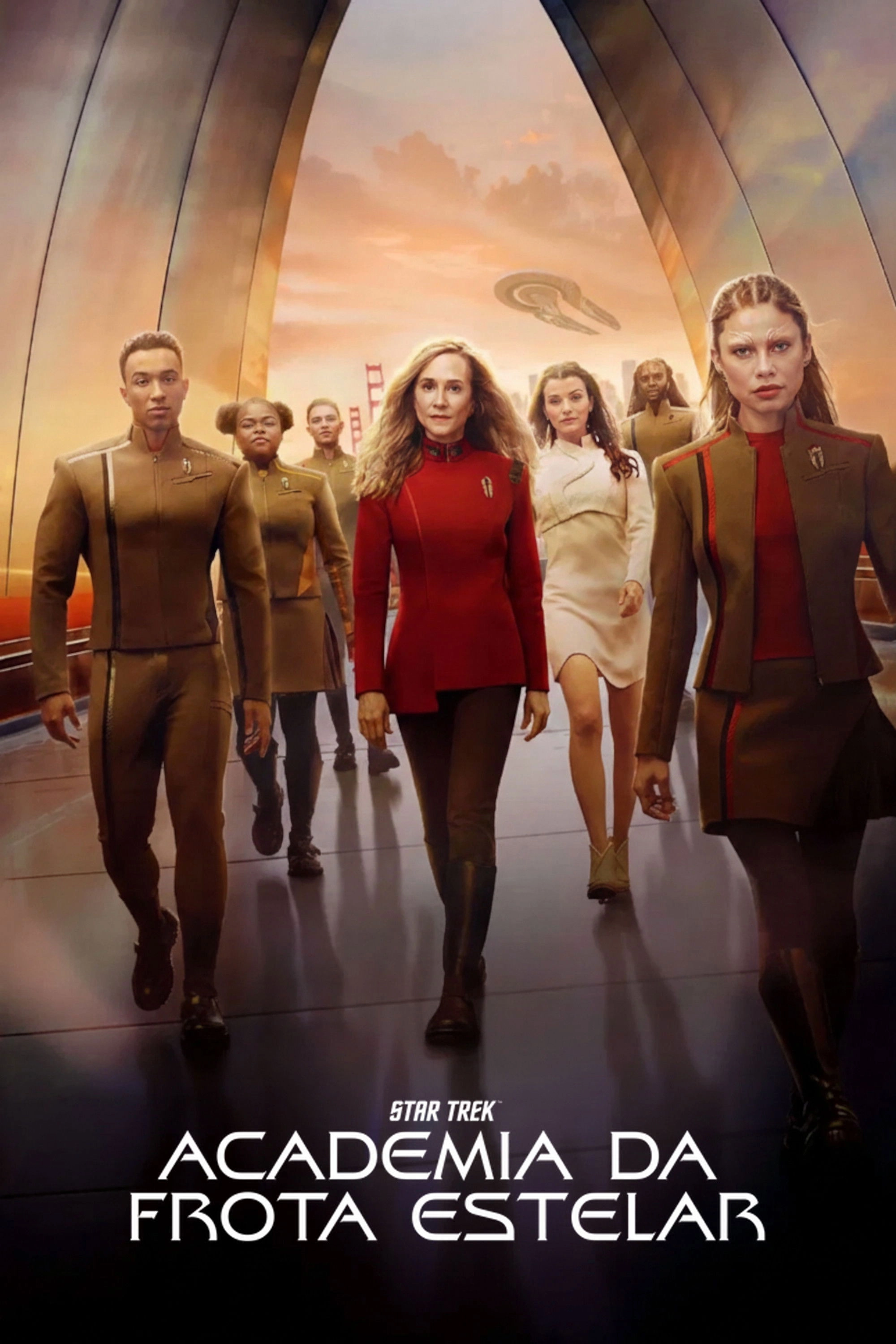
Live long and prosper — and to the Southern affiliates who blacked out that kiss in 1968: the future happened anyway.
Related title: Star Trek: Starfleet Academy
Comments (0)
Log in to leave a comment.